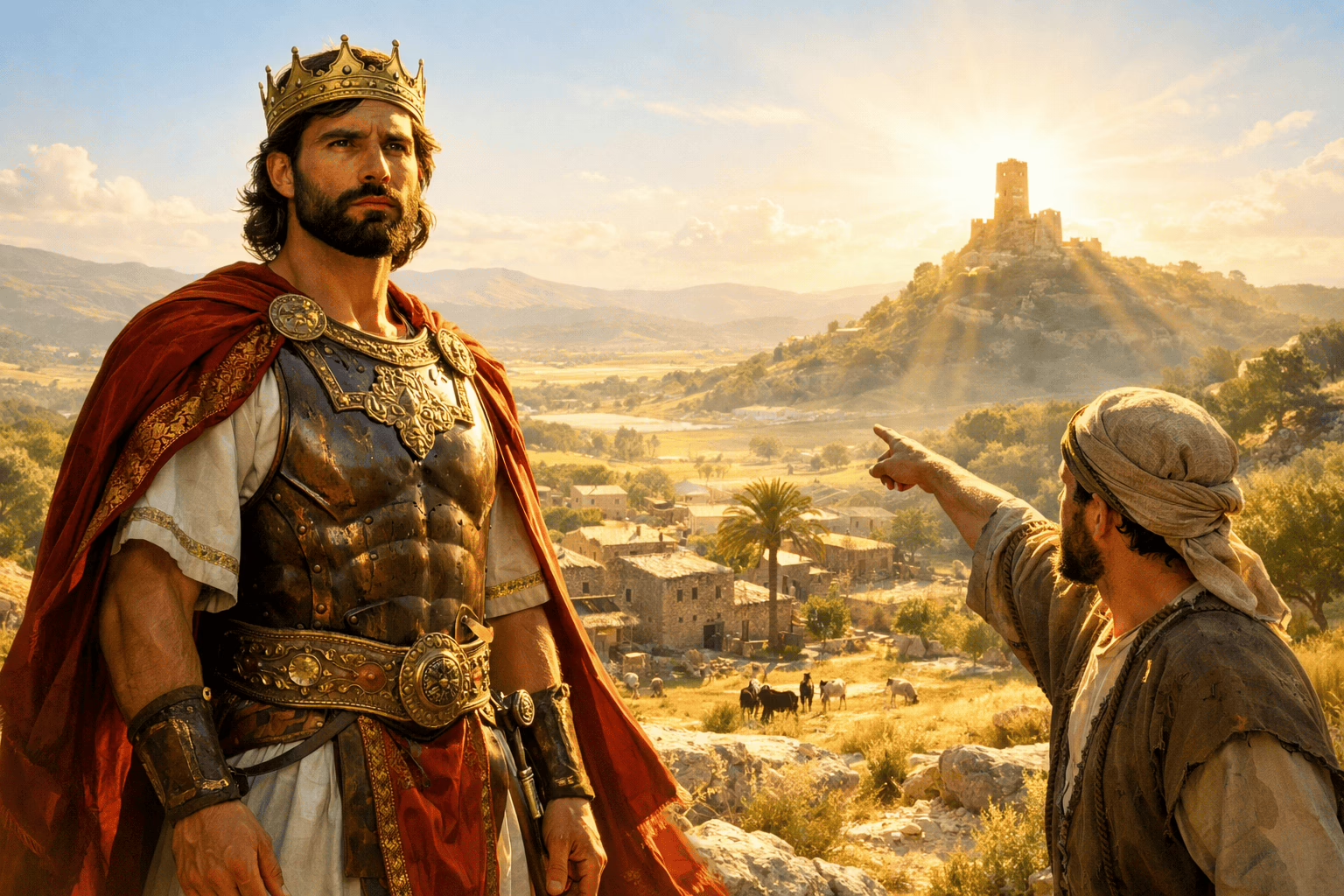
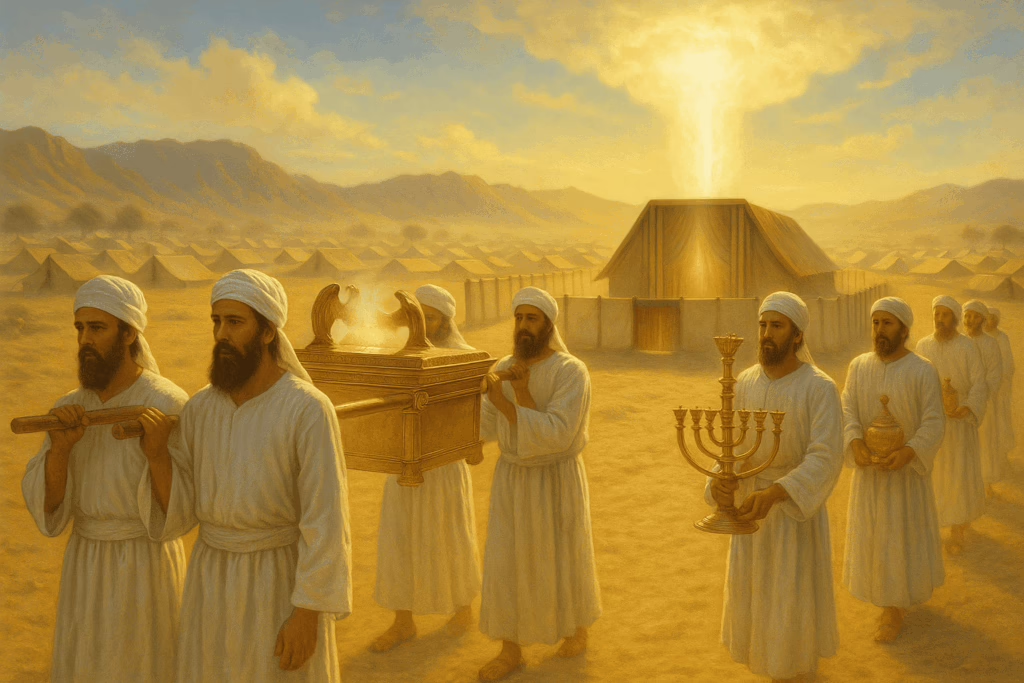
In the wilderness, every tribe had a role—but one was set apart for sacred service.
In Numbers 1:47–54, the Levites were excluded from the census, not because they were forgotten, but because they were chosen.
Their calling was unique: to dwell near the Tabernacle, to serve, and to protect the holiness of G-d’s dwelling.
This passage reveals powerful truths for believers today:
- We are all called to live differently.
- Faithful service requires obedience and order.
- True worship begins with trust and dependence on G-d.
The Levites: Counted Differently, Called Uniquely
“But the tribe of Levi you shall not count, nor lift up their heads in the midst of Israel.” (Numbers 1:49)
While other tribes were counted for battle, the Levites were counted for ministry.
They were not part of the general census because their value was not in war, but in worship.
Their lives were a testimony that service to G-d is the highest calling.
The act of “lifting up the head” symbolized recognition and encouragement.
G-d Himself acknowledged the Levites—not through offerings, but through assignment.
Serving Around the Tabernacle
The Levites encamped closest to the Tabernacle of Testimony, forming a sacred barrier between G-d’s presence and the people.
Their nearness represented responsibility, not privilege.
They were entrusted to:
- Carry and assemble the Tabernacle and its furnishings.
- Guard the holy things from unauthorized approach.
- Model obedience to divine instruction.
?? Any outsider who approached was to be put to death—a solemn reminder that holiness requires boundaries and reverence.
Leadership and Obedience
The Levites’ faithfulness prevented wrath from falling upon Israel.
“The Levites shall camp around the Tabernacle… that there may be no wrath on the congregation.” (Numbers 1:53)
Their obedience shielded the nation. Likewise, godly leaders today set the tone for the people they serve.
? Principle: When leaders walk in submission to God, their faithfulness inspires and preserves the community.
Conversely, disobedience in leadership invites confusion and judgment.
Holiness flows from the top down.
The Call to Dependence
The Book of Numbers—Bamidbar, meaning In the Wilderness—reminds us that the desert is G-d’s classroom.
In a place of emptiness, Israel learned that:
- Provision comes from G-d alone.
- Purpose is revealed through obedience.
- Presence follows submission.
Every believer is called to live as the Levites did—set apart, faithful, and fully reliant on G-d’s presence.
“When we trust, obey, and serve, we gain access to God’s presence, power, provision, and perspective.”
Lessons for Today
- Trust: Life flows from G-d, not self.
- Obedience: Commands reveal His expectations.
- Order: Divine structure brings peace.
- Leadership: Faithful leaders mediate blessing.
“When leaders are faithful, their faithfulness is manifested through the obedience of G-d’s people.”
We too are a royal priesthood, called to live differently, serve faithfully, and guard the testimony of G-d’s Word.
Conclusion:
The Levites remind us that holiness is not passive—it’s a calling.
G-d’s presence demands order, obedience, and reverence.
In a world chasing recognition, may we be like the Levites—content to be counted differently, yet fully known by G-d.
“He is the lifter of our heads, our provider, and our sustainer.”
Shalom from Israel.
Full Study: LoveIsrael.org
Mobile App: My Bible Study
Watch Weekly Teachings: Vía Hafta Israel
Teaching by Dr. Baruch Korman
Discover more teachings on our channel: