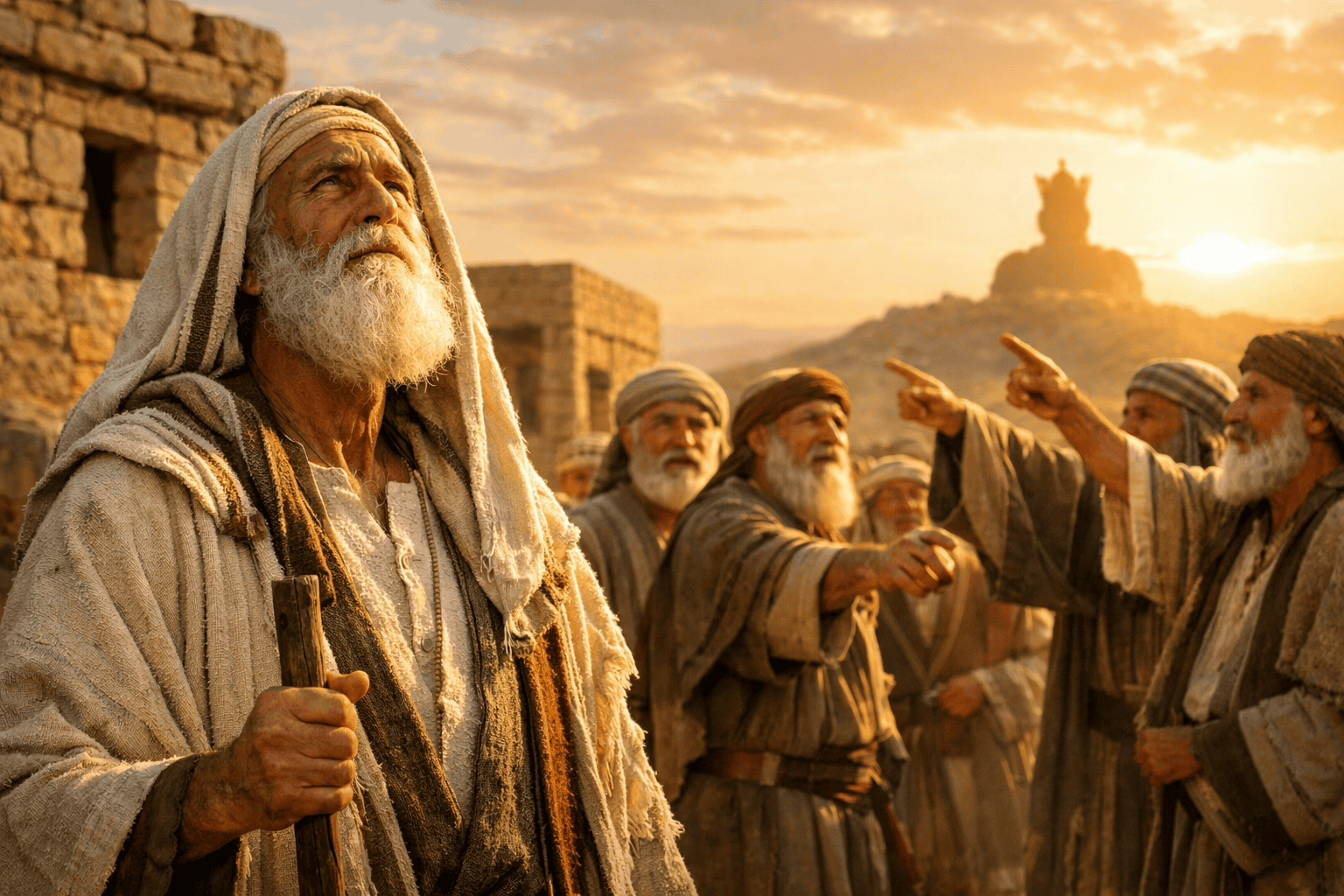
The transition of leadership in ancient Israel marked a pivotal point—not just politically, but deeply spiritually. In this expository teaching, Dr. Baruch Korman analyzes the moment when the elders of Israel approached the prophet Samuel to demand a radical change: the move from a theocracy led by judges to a human monarchy.
The Failure of Succession and the Leadership Crisis
Even the most godly men can face family crises. Like his predecessor Eli, Samuel’s sons did not walk in the ways of their father. Samuel, being old, set his sons Joel and Abiah as judges in Beer Sheva to test their leadership. Unfortunately, these young men turned after profit, taking bribes and perverting justice. This lack of integrity in the succession was the pretext the elders of Israel used to justify their demand.
The Desire for Assimilation: “To Be Like All the Nations”
The core of Israel’s sin was not simply asking for a new leader, but the motivation behind the request. The elders wanted a king to be “like all the other nations”. Instead of embracing their call to be a sanctified, unique people set apart for G-d’s purposes, Israel chose assimilation. They wanted to depart from the divine order to adopt the world’s system, demonstrating that they no longer wanted G-d’s truth to influence the nations, but rather for the nations to influence them.
The Rejection of Divine Authority
G-d’s response to Samuel is revealing and blunt: “They have not rejected you, but they have rejected Me from reigning over them”. The Hebrew term used (maas) implies a loathing or a strong rejection of G-d’s authority. Israel did not want to submit to biblical truth; they wanted to be their own authority and make their own decisions based on a human model.
Consequences of a Human King
Samuel, under divine instruction, warned the people about the “judgment of the king.” While G-d is a generous, merciful, and just sovereign, a human king naturally tends toward selfishness and self-benefit. When we reject G-d’s way, we place ourselves under the authority of the enemy, who exploits our weaknesses through carnal leaders.
Conclusion
The story of 1 Samuel 8 is a warning for believers today. True wisdom and victory are found only by submitting to the King of kings and L-rd of lords, Yeshua the Messiah. Only under His authority do we experience the godly change we need and the blessings of His promises. Let us not seek to be like the world; let us seek to be transformed by the sovereignty of Him who is eternally G-d.
To expand on this topic, follow this link: