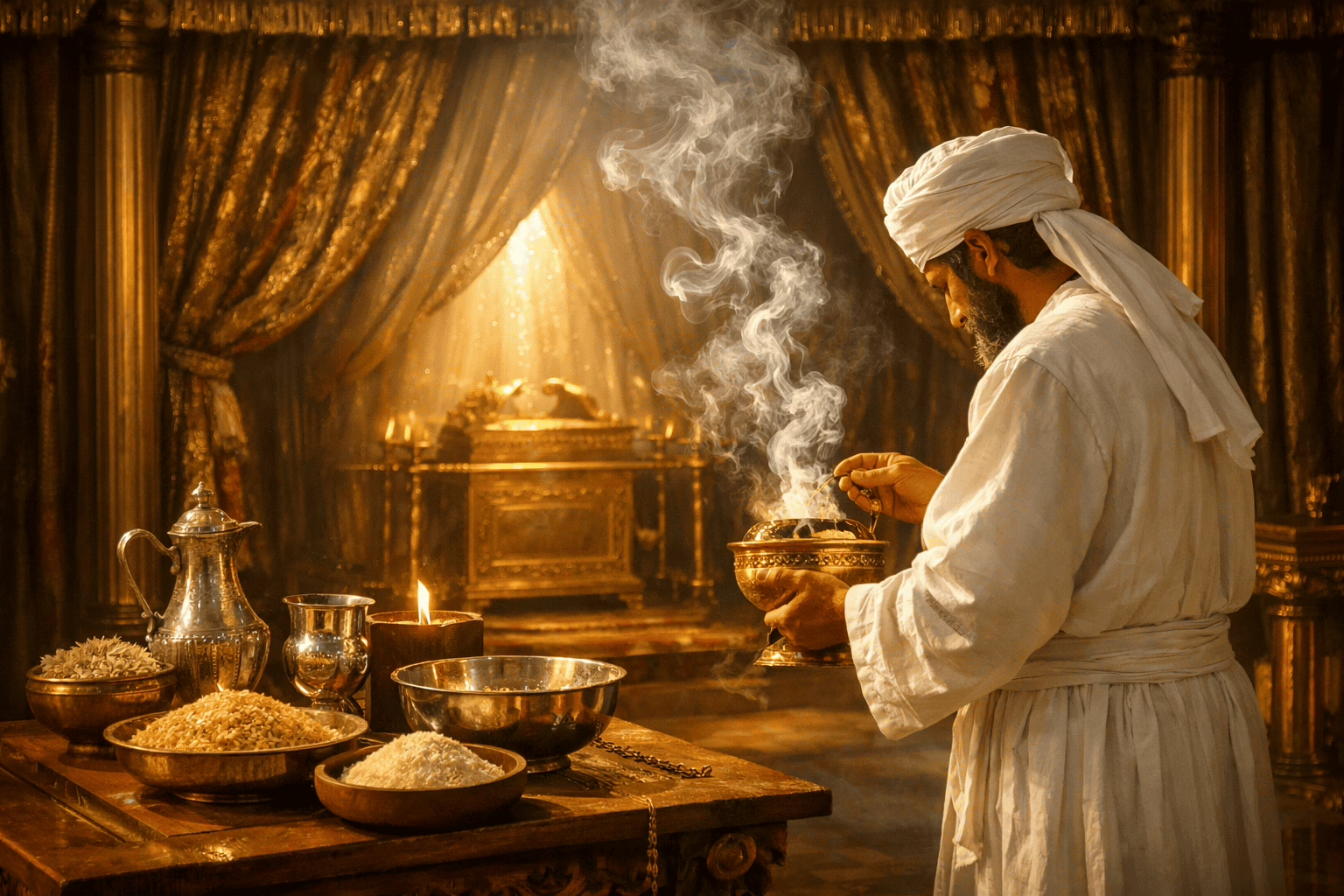
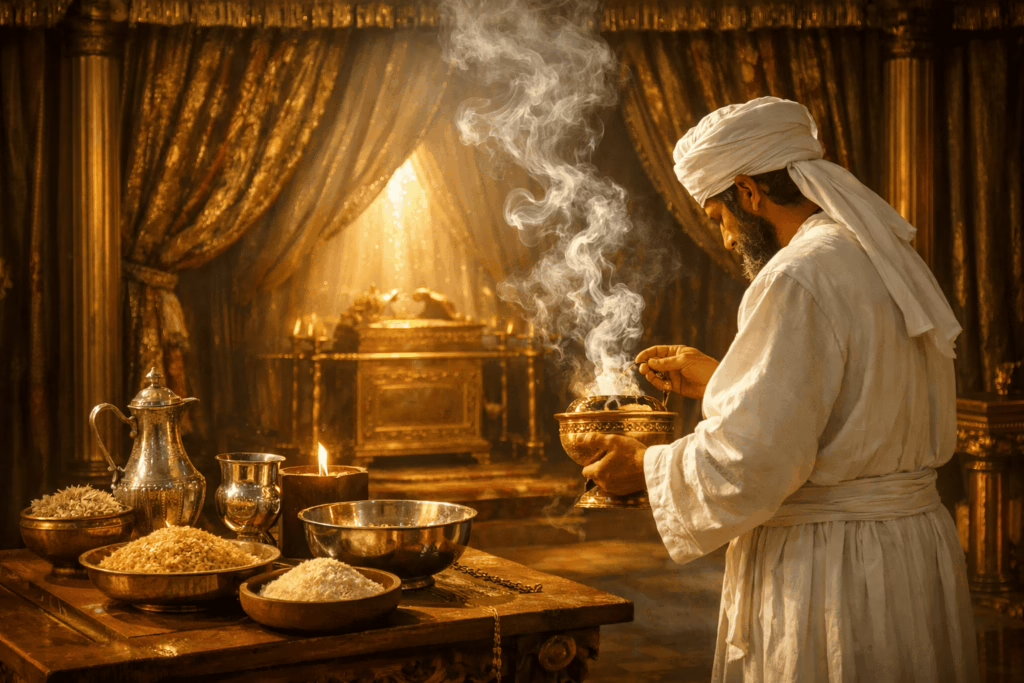
In our study of Numbers 18, we delve into the fundamental principles governing the relationship between the people of Israel and the L-rd through the system of worship. Redemption is a central theme that requires an offering, and in this chapter, we see how G-d establishes a specific order for the redemption of the firstborn, of both humans and animals, marking a clear distinction between the clean and the unclean.
The Redemption of the Firstborn and the Value of Holiness
The Scripture uses the Hebrew word Peter, which refers to “that which opens the womb.” Every firstborn belongs to the L-rd. However, there is a distinction in their treatment: while clean animals (oxen, sheep, goats) are offered directly because they are holy, human beings and unclean animals must be redeemed through a ransom price. This redemption, valued at five silver shekels according to the sanctuary weight, teaches us that life does not belong to us by right, but must be acknowledged and symbolically returned to G-d.
The Inheritance of the Levites: Abundance in Service
A vital principle in this passage is that the Levites and the priests have no inheritance of land in Israel; their inheritance is the L-rd Himself. G-d grants them the tithes of the children of Israel as a reward for their service in the Tent of Meeting. This “eternal statute” has a direct connection to the Kingdom of G-d, where there is no scarcity but overflowing abundance. By serving as mediators and bearing the iniquity of the sanctuary, the Levites foreshadow the perfect security we have in the Kingdom, based not on our works, but on the order established by the L-rd.
Worship: An Act of Surrender and Authority
True worship always involves giving and sacrifice. It is never a void act, nor should it be “profaned” (Kala), a Hebrew term related to emptiness or a lack of value. To worship properly means following G-d’s instructions rather than our own fleshly preferences. Worship is, above all, the acknowledgment of G-d’s absolute authority over our lives. When we submit to His Word and offer our best—our “choice portions”—we demonstrate that He is our Master (Adonai).
Conclusion: Toward an Eternal Redemption
Unlike the temporary atonement of the Old Testament, which merely covered sin, the redemption that Yeshua Hamashia purchased with His own blood is eternal. As detailed in Hebrews 9:12, His sacrifice was perfect and all-sufficient. Today, as disciples, we are called to be “living sacrifices,” responding with obedience and love to the One who first loved us. Our lives must bear witness that we belong to the L-rd, subjecting every thought and action to His supreme will.
To learn more about this topic, follow this link: