When Glory Departs: Judgment, the Ark, and the Only Way of Redemption
A Study of 1 Samuel 4:12–22
Scripture is unequivocal: our G-d is a G-d of judgment. And He judges because He is holy, righteous, and faithful. G-d’s Word teaches that sin leads to death—yet it also proclaims good news: there is a way to avoid eternal punishment and receive eternal life.
That way is not moral effort, religious identity, or human tradition. There is only one way into the Kingdom of G-d—through one Savior: Messiah Yeshua (Jesus Christ). Redemption is grounded in the sufficiency of His work on the cross. When Messiah declared, “It is finished,” He announced that the work was complete—perfect—fully sufficient to purchase eternal redemption by His blood. Salvation is not maintained by human strength; it is secured by Messiah’s finished work.
With this foundation, we turn to a sobering historical moment where judgment fell on Israel’s leadership—and where Scripture declares something shocking: the glory went into exile.
A Wrong Question: “Heaven or Hell?”
Before opening the text, we must address a common assumption. Many people believe eternity is simply “heaven or hell.” Yet biblically, that framing is incomplete.
Revelation speaks of a new heaven and a new earth, what many call the “second creation.” The eternal destination for the redeemed is not a disembodied heaven—it is the New Jerusalem, the final state of the Kingdom of G-d. And for those who reject G-d’s salvation, Scripture teaches that “hell” ultimately gives way to the lake of fire, which is the final, eternal judgment.
So the real question is:
Will you spend eternity in the New Jerusalem—or in the lake of fire?
And Scripture insists: the only way to avoid eternal judgment is the gospel—faith in Messiah Yeshua.
“That Day”: The Language of Judgment
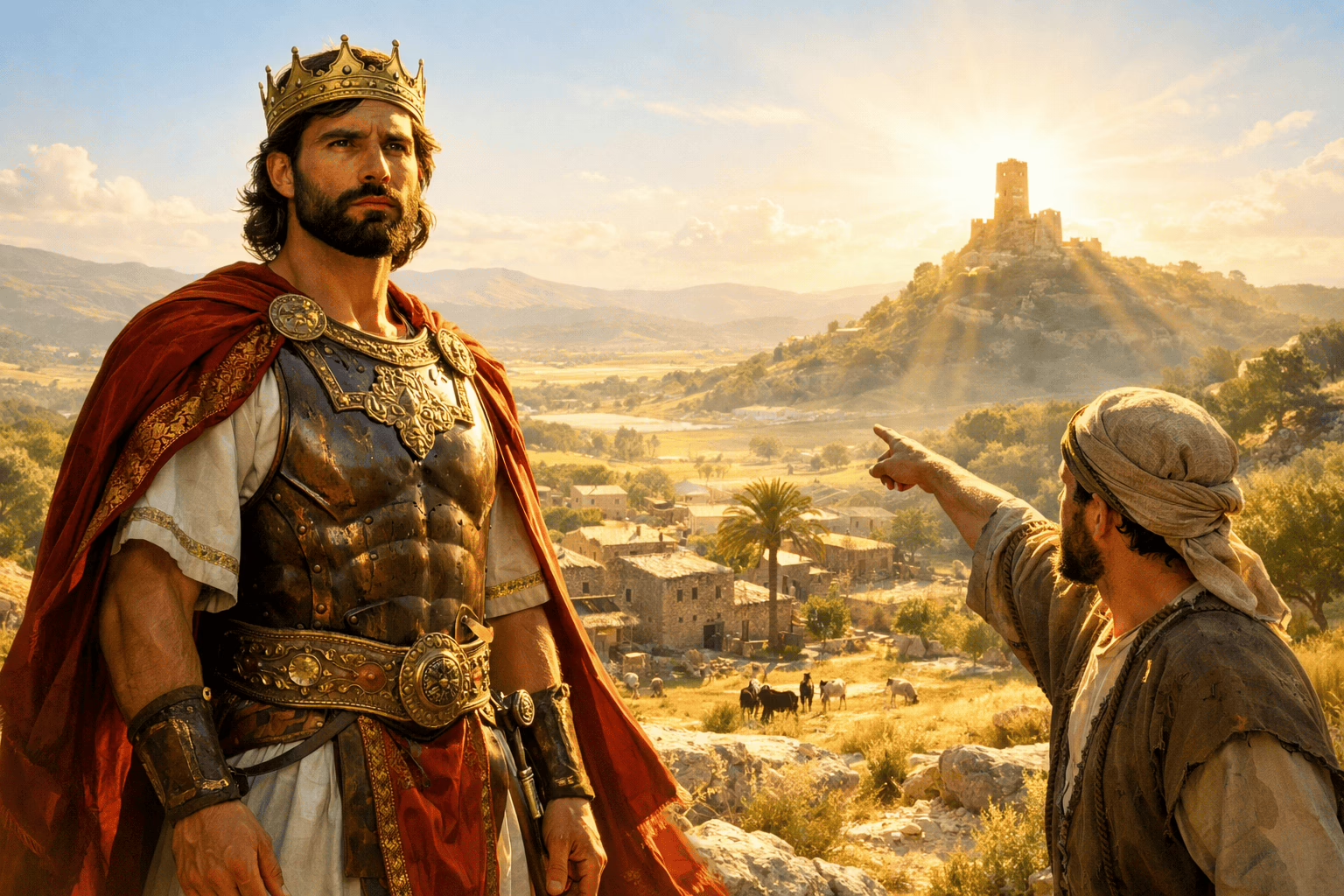
In 1 Samuel 4, Israel is at war with the Philistines. A messenger runs from the battlefield to Shiloh—yet the text is careful to mark the moment with a familiar biblical signal: “that day” (Hebrew: beyom hahu), an expression frequently associated with judgment.
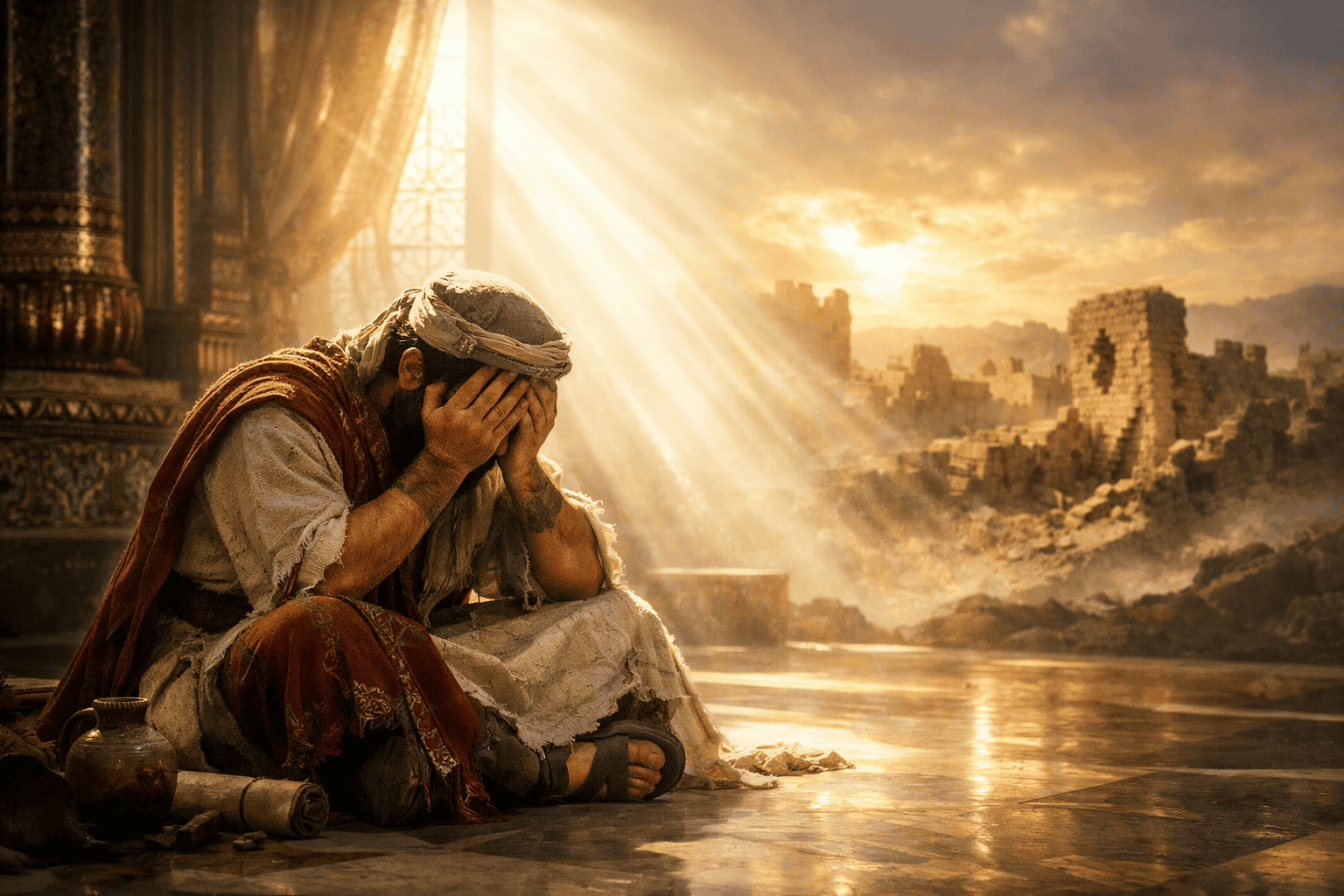
The messenger’s torn clothes and dirt on his head reflect grief, mourning, and national calamity. This was not merely a military defeat. It was a spiritual crisis—an event revealing G-d’s displeasure.
Eli’s Fear—and Israel’s Screaming
Eli, the priest and leader, is found sitting near the way, watching. Why? Because his heart trembled for the ark of G-d.
The ark represented G-d’s presence, power, and truth. But under Eli’s leadership—and under the wickedness of his sons—Israel had not been walking in truth. Their worship had been corrupted, their leadership compromised, and their hearts dulled to obedience.
When the messenger delivers the report, the city erupts in screaming. This response signals not only loss, but terror—because the news reveals that Israel’s relationship with G-d had reached a breaking point.
The Report: Plague, Death, and the Ark Taken
The messenger’s words are devastating:
- Israel fled before the Philistines
- A great “plague” came upon the people (language signaling divine origin and divine judgment)
- Eli’s two sons—Hophni and Phinehas—died
- The ark of G-d was taken
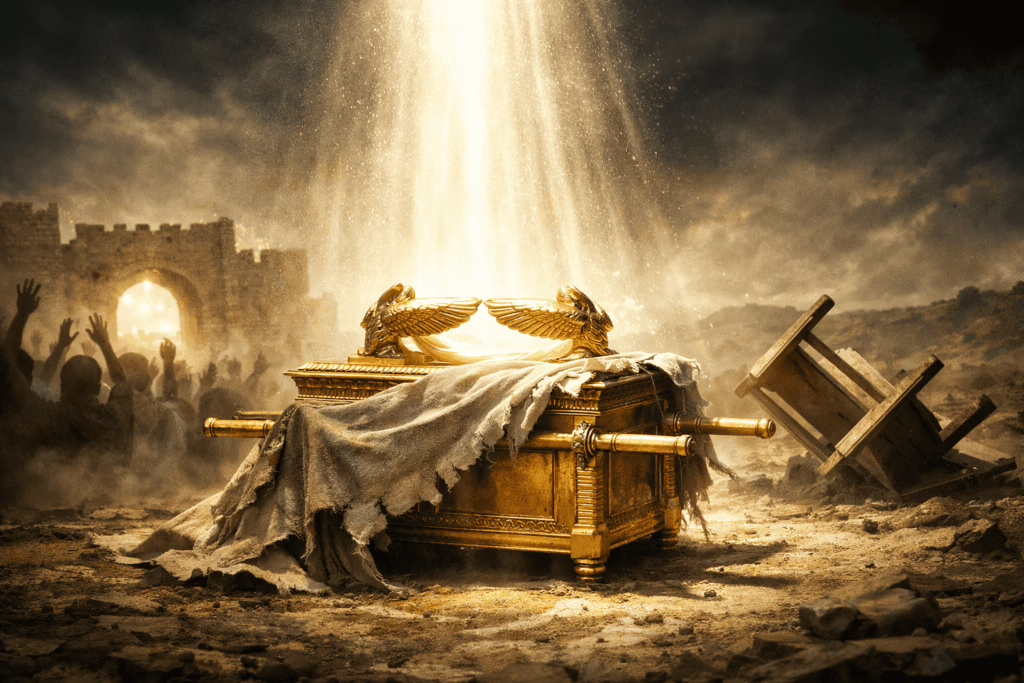
The order matters. The death of the sons is tragic, but the taking of the ark is catastrophic. Why? Because it signifies something spiritual: Israel has lost the manifestation of G-d’s glory among them.
Eli Falls at the Gate: Judgment Confirmed
When Eli hears the ark has been taken, he falls backward from his seat near the gate. Biblically, the gate is a place of judgment—where decisions are rendered, where truth is weighed, where outcomes are declared.
Eli’s neck breaks. He dies. And Scripture notes he judged Israel for forty years—a number that often signals transition. G-d was bringing an era to an end.
G-d’s judgment was not random cruelty. It was discipline aimed at producing change—because G-d will not endorse rebellion, hypocrisy, and corrupted leadership.
“Ichabod”: The Glory Has Departed
The narrative grows even more intense. Phinehas’ wife hears the news and goes into labor. She gives birth and dies. But before her death, she names her son Ichabod, meaning: “No glory.”
Why that name?
Because she recognizes the true tragedy:
“The glory has departed from Israel… because the ark of G-d was taken.”
The text repeats the statement for emphasis. Repetition in Scripture is not filler—it is a spotlight. This is the theological center of the passage:
When G-d’s people abandon truth, glory departs.
And when glory departs, it signals exile—G-d’s displeasure—G-d’s judgment.
What Comes Next: G-d Will Reveal Himself
Yet the story does not end in despair. G-d is about to do something remarkable: He will manifest His authority even among the Philistines. They will place the ark in a pagan setting, and G-d will demonstrate—powerfully—that He is not a tribal deity, not a local force, not an object to be manipulated.
G-d will reveal Himself so that people must decide:
Will they respond with faith—like Abraham—or will they reject Him?
The Outcome for Us
This passage confronts every reader with two realities:
- G-d judges sin because He is holy.
- G-d provides salvation through one Savior because He is merciful.
Wisdom is not merely acknowledging G-d’s sovereignty. Wisdom is responding to it—coming before Him humbly, surrendering to His truth, and receiving redemption through Messiah Yeshua.
When we surrender to G-d’s truth, we walk in wisdom.
When we reject it, the consequences are severe.
The question is not whether G-d is powerful.
The question is whether we will submit to His authority.
Visit LoveIsrael.org for more Bible teachings, articles, and video messages from Dr. Baruch Korman
You can also watch this full teaching on YouTube at LoveIsrael Channel or listen through the My Bible Study mobile app.